
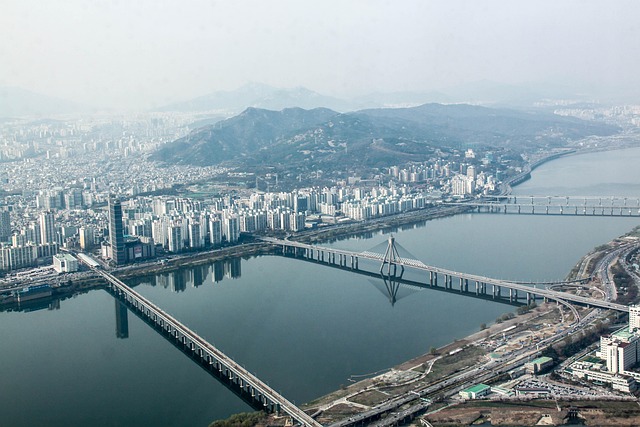
The Genesis of Green Finance Policy South Korea: A National Imperative
Green finance policy South Korea is rapidly evolving, driven by an urgent need for sustainable development and robust climate action. This proactive approach aims to integrate environmental considerations into financial decisions across all sectors. It reflects the nation’s profound commitment to transforming its economy towards a low-carbon, resource-efficient future. Global investors are increasingly recognizing the vast potential embedded within this transformative Green finance policy South Korea framework.
Historical Context and Initial Commitments
South Korea’s journey towards green finance began with the “Green Growth” initiative in 2008, establishing an early foundation for environmental-economic integration. This visionary framework aimed to foster new growth engines through green technologies and industries, signaling a significant policy shift. Subsequent years saw the introduction of various legislative acts and governmental bodies dedicated to this emerging sector.
Key early commitments included substantial investments in renewable energy infrastructure and the establishment of dedicated funds. The nation’s experience with rapid industrialization highlighted the importance of balancing economic progress with environmental stewardship. These initial steps paved the way for the comprehensive Green finance policy South Korea we observe today.
Key Regulatory Frameworks and Legislative Milestones
The formalization of Green finance policy South Korea gained significant momentum with the announcement of the Korean New Deal in 2020. This ambitious national strategy includes the “Green New Deal,” allocating substantial resources to green infrastructure, low-carbon energy transition, and fostering green industries. The Financial Services Commission (FSC) plays a pivotal role in designing and implementing these financial policies, ensuring market stability and transparency.
Further strengthening the regulatory landscape, the Korea Exchange (KRX) introduced K-ESG guidelines in 2021, encouraging companies to adopt more sustainable business practices. These guidelines help standardize ESG disclosures, making it easier for investors to identify genuinely green ventures. Such legislative milestones are crucial in solidifying the foundation of Green finance policy South Korea, making it more attractive and reliable for international capital.
- 2008: “Green Growth” Vision launched, emphasizing green technology and industries.
- 2010: Enactment of the Framework Act on Low Carbon, Green Growth, providing legal basis.
- 2015: Introduction of the Emissions Trading Scheme (ETS), a market-based mechanism for carbon reduction.
- 2020: Korean New Deal, featuring the “Green New Deal” with over ₩160 trillion (approx. $130 billion USD) allocated by 2025.
- 2021: Financial Services Commission (FSC) unveils comprehensive K-ESG Guidelines for corporate sustainability reporting.
Strategic Drivers: Why South Korea is Prioritizing Green Finance
The strategic prioritization of Green finance policy South Korea is multi-faceted, stemming from both domestic imperatives and global responsibilities. South Korea, as a leading global economy, recognizes that sustainable growth is the only viable path forward. This understanding underpins the entire framework of its green financial initiatives.
Economic Resilience and Sustainable Development Goals
South Korea aims to foster economic resilience by transitioning away from carbon-intensive industries, reducing its dependence on fossil fuel imports, and creating new, future-proof job markets. The Green finance policy South Korea is designed to channel capital into sectors that contribute to long-term economic stability and innovation. It aligns closely with the United Nations Sustainable Development Goals (SDGs), particularly those related to affordable and clean energy, industry, innovation, and infrastructure, and climate action.
By investing in green infrastructure and technologies, South Korea seeks to enhance its competitive edge in emerging global markets. This strategic shift not only mitigates environmental risks but also unlocks significant economic opportunities. The focus on Green finance policy South Korea is thus a pragmatic decision for sustained national prosperity.
Climate Change Mitigation and Energy Transition Targets
A primary driver for Green finance policy South Korea is the urgent need to address climate change. The nation has set ambitious targets, including achieving carbon neutrality by 2050 and increasing renewable energy’s share to 30% of total generation by 2030. These goals necessitate a massive reallocation of capital towards renewable energy projects, energy efficiency improvements, and low-carbon technologies.
The government’s commitment to these targets is reflected in robust policy support and financial incentives for green projects. This creates a predictable and attractive investment environment for both domestic and international investors. Green finance policy South Korea is therefore a critical enabler of the nation’s climate commitments.
Instrumental Pillars: Financial Tools Shaping Green Finance Policy South Korea
The implementation of Green finance policy South Korea relies on a diverse array of financial instruments and mechanisms designed to mobilize capital towards sustainable initiatives. These tools encourage both public and private sector participation in the green transition. Understanding these pillars is crucial for any investor looking to engage with the Korean market.
Green Bonds, Loans, and Sustainable Investment Funds
Green bonds have become a cornerstone of Green finance policy South Korea, allowing entities to raise capital specifically for environmentally beneficial projects. The market for Korean green bonds has seen exponential growth, with issuances typically ranging from 5 to 10-year maturities and attracting significant institutional interest. Corporations, public entities, and even local governments are increasingly leveraging these instruments.
Beyond bonds, green loans, often provided by state-backed institutions like the Korea Development Bank (KDB) and the Export-Import Bank of Korea (KEXIM), offer preferential terms for sustainable projects. Furthermore, a growing number of sustainable investment funds, including the “Green New Deal Fund,” provide avenues for investors to directly support companies aligned with the national green agenda. These funds are designed to accelerate investment in areas like renewable energy, smart cities, and eco-friendly mobility.
Government Incentives and Public-Private Partnerships
To catalyze green investments, the government provides a comprehensive suite of incentives. These include tax credits for R&D in green technologies, which can be as high as 25% for small and medium-sized enterprises (SMEs) and 10% for large corporations. Additionally, investments in green facilities and equipment can qualify for up to a 10% tax deduction. These incentives significantly improve the financial viability of green projects.
Public-Private Partnerships (PPPs) are also central to Green finance policy South Korea, enabling large-scale infrastructure projects that might be too capital-intensive for either sector alone. The government often de-risks these projects through guarantees or co-financing, making them more appealing to private investors. This collaborative approach ensures that critical green infrastructure, from offshore wind farms to smart city developments, receives the necessary funding.
- Tax Credits: Up to 25% for R&D in green technologies; up to 10% for green facility investments.
- Subsidies: Direct subsidies for renewable energy generation and energy efficiency improvements.
- Guarantees: Government guarantees for green project financing, reducing investor risk.
- Low-Interest Loans: Provided by state banks for eligible green projects.
- Dedicated Funds: “Green New Deal Fund” and other specialized funds channeling capital into green sectors.
Navigating the Landscape: Opportunities and Challenges for Global Capital
The evolving Green finance policy South Korea presents a dynamic landscape for global investors, brimming with opportunities but also requiring careful navigation of specific challenges. Understanding these facets is key to successful engagement with the Korean green market. The robust policy support creates a fertile ground for growth, yet due diligence remains paramount.
Regulatory Complexities and Standardization Efforts
While South Korea has made significant strides in standardizing its green finance framework, navigating its regulatory environment can still be complex for foreign investors. Varied reporting requirements across different green bond standards (e.g., ICMA Green Bond Principles vs. domestic guidelines) sometimes necessitate careful interpretation. The FSC is continually working to harmonize these standards, but staying updated is crucial.
Efforts by the Financial Services Commission (FSC) to unify K-ESG reporting and align with international best practices are ongoing, aiming to enhance transparency and comparability. Despite these complexities, the overall trajectory points towards greater clarity and consistency in Green finance policy South Korea, which will benefit all market participants in the long run.
Emerging Market Potential and Sector-Specific Growth
South Korea’s commitment to green finance opens up considerable sector-specific growth potential. Renewable energy (solar, wind, hydrogen), electric vehicles (EVs) and their charging infrastructure, smart grid technologies, and green buildings are areas experiencing rapid expansion. The government’s ambitious targets ensure sustained demand and investment in these sectors.
Furthermore, South Korea’s advanced manufacturing capabilities and strong R&D infrastructure make it an attractive hub for developing and deploying innovative green technologies. For global investors, this translates into opportunities not just for financial returns but also for strategic partnerships and technological advancements within the framework of Green finance policy South Korea.
| Feature | Traditional Investment Focus (Pre-2010) | Green Investment Focus (Current Green Finance Policy South Korea) |
| Primary Energy Source | Fossil Fuels (Coal, Oil, Gas) | Renewable Energy (Solar, Wind, Hydrogen) |
| Key Industrial Sectors | Heavy Manufacturing, Petrochemicals, ICT | Renewable Energy, Eco-mobility, Green Building, Waste Management, Carbon Capture |
| Investment Metrics | Financial Returns, Market Share, Production Volume | Financial Returns, ESG Performance, Environmental Impact, Carbon Footprint Reduction |
| Regulatory Emphasis | Economic Growth, Industrial Competitiveness | Sustainable Development, Climate Action, Green Innovation, Financial Stability |
| Typical Financing Instruments | Corporate Bonds, Bank Loans, Equity | Green Bonds, Sustainability-Linked Loans, ESG Funds, Impact Investments |
Measuring Progress: Impact, Evolution, and Future Trajectories
The efficacy of Green finance policy South Korea is continually assessed through various metrics, revealing both successes and areas for further development. The nation’s commitment extends beyond mere policy formulation to ensuring tangible outcomes. This ongoing evaluation informs the future direction and refinement of green financial strategies.
Tangible Outcomes and Economic Contributions
Since the inception of focused Green finance policy South Korea, the nation has seen a significant increase in renewable energy capacity and a reduction in carbon emissions intensity. For example, the total installed renewable energy capacity has grown substantially, with solar and wind power leading the expansion. The green bond market has expanded dramatically, channeling billions into sustainable projects.
Economically, the green sector is increasingly contributing to GDP and job creation. Reports from institutions like the Korea Institute of Finance (KIF) regularly highlight the positive correlation between green investments and economic resilience. These tangible results underscore the effectiveness of Green finance policy South Korea in driving both environmental protection and economic growth.
Evolving Strategies and International Collaboration
Green finance policy South Korea is not static; it is constantly evolving to meet new challenges and integrate global best practices. The government is actively exploring new financial products, such as blue bonds for marine conservation and transition bonds for hard-to-abate sectors. There’s also a growing emphasis on climate-related financial disclosures, aligning with TCFD (Task Force on Climate-related Financial Disclosures) recommendations.
Furthermore, South Korea is keen on strengthening international collaboration in green finance, sharing its experiences and learning from global partners. Participation in international forums and bilateral agreements aims to accelerate the global transition to a sustainable economy. This collaborative spirit defines the future trajectory of Green finance policy South Korea, positioning the nation as a key player in global green finance.
Practical Engagement: Leveraging Green Finance Policy South Korea for Sustainable Growth
For global investors and businesses, engaging with Green finance policy South Korea requires a strategic approach that understands local nuances and leverages available support. This practical section outlines key considerations for effectively participating in South Korea’s burgeoning green economy. Proactive engagement can yield significant long-term benefits.
Identifying High-Impact Investment Avenues
Identifying key investment sectors aligned with Green finance policy South Korea is paramount. Focus areas include renewable energy generation (especially offshore wind and hydrogen fuel cell technologies), energy storage solutions, smart city development, and circular economy initiatives. Companies involved in advanced battery technology for EVs or innovative waste-to-energy solutions offer particularly strong prospects.
Investors should also look for projects that receive direct support or incentives under the Green New Deal, as these typically benefit from government backing and a more streamlined approval process. Consulting with local financial advisors who specialize in green finance can help pinpoint the most impactful and financially viable opportunities within Green finance policy South Korea.
Due Diligence and Compliance in the Korean Market
Thorough due diligence is essential when investing in projects or companies influenced by Green finance policy South Korea. This involves not only financial analysis but also a deep dive into environmental and social impact assessments, adherence to K-ESG guidelines, and understanding local permitting processes. Ensuring compliance with South Korean environmental regulations is crucial to avoid potential risks.
Partnering with local legal and consulting firms can significantly mitigate regulatory complexities and ensure full compliance. Understanding the nuanced application of Green finance policy South Korea in specific regional contexts (e.g., industrial zones vs. rural areas) is also important. A robust compliance framework built on local expertise will pave the way for successful and sustainable investments in the South Korean green market.
🔗 Green finance policy South Korea 연관 인기 가이드
- ✨ Green finance policy South Korea Extensive Industry Report
- ✨ Green finance policy South Korea Extensive Industry Report
- ✨ Green finance policy South Korea Extensive Industry Report
- ✨ Green finance policy South Korea Extensive Industry Report
- ✨ Green finance policy South Korea Extensive Industry Report
- ✨ Green finance policy South Korea Extensive Industry Report
📚 References & Official Sources
❓ Frequently Asked Questions
What is the primary goal of Green finance policy South Korea?
The primary goal is to integrate environmental considerations into financial decisions to achieve sustainable development and combat climate change, aligning economic growth with low-carbon transition and resource efficiency.
How does South Korea encourage green investments?
South Korea encourages green investments through various mechanisms including green bonds, preferential green loans from state banks, significant tax credits for green R&D and facility investments, and dedicated government funds like the “Green New Deal Fund.”
What are the key sectors for green investment in South Korea?
Key sectors for green investment include renewable energy (solar, wind, hydrogen), electric vehicles and infrastructure, energy storage, smart city development, green buildings, and circular economy initiatives.